Summary
- AMD’s decision to move RDNA 1 and 2 GPUs to “maintenance mode” damaged consumer trust, even after the company walked back the announcement.
- RDNA 2 cards remain powerful and popular, making early driver support cuts feel premature and unfair.
- Moves like this make it seem as if AMD is forcing capable GPUs into artificial obsolescence to push consumers to upgrade sooner than necessary.
If you’ve been following tech news, you’ve probably seen AMD step on a rake. The company announced it was pulling game-ready driver support for its RDNA 1 and 2 GPUs by putting them in “maintenance mode.”
After a wave of backlash, AMD walked things back with a new announcement, promising two dedicated driver branches for RDNA 1/2 and RDNA 3/4. All of this is a messy saga, and I’m not buying any of it. AMD’s first statement says more about the company’s future plans than any damage control ever could. Quite frankly, I’m disappointed.
Why did I buy a used AMD RX 6800 XT?
In the past eight years, I’ve been a dedicated AMD fan. All my hard-earned cash went into building and upgrading first the AM4 platform, and now the AM5 platform.
AMD’s hardware has generally offered better value and more consistent firmware and software support, so I was more than happy to vote with my wallet.

Features like AFMF2, Anti-Lag 2, and FSR 3.1, making it to older cards, were standard practice for AMD. But the release of FSR 4 earlier this year, exclusive to RDNA 4, hinted at a shift.
With a simple driver mod, FSR 4 can run on older cards, including my RDNA 2-based RX 6800 XT and newer RDNA 3 GPUs was perhaps the first warning that AMD wasn’t as pro-consumer as I’d believed.
That’s why I went for an all-AMD build: better value, extra features like Anti-Lag when both CPU and GPU are AMD, solid software, and the perception of being the “people’s alternative” to NVIDIA and Intel. Or so I thought.
Anyway, the RDNA 2 GPUs used in the AMD RX 6000 series graphics cards are still perfectly capable of handling modern video games. My RX 6800 XT is a powerhouse of a card that I bought used for only around $350 earlier this year.

I’ve already gamed for hundreds of hours on it, including finishing God of War Ragnarök and the notoriously demanding The Elder Scrolls IV: Oblivion Remastered.
All of this gaming was done on a 1440p monitor and a 4K TV. Naturally, I used FSR and frame generation to squeeze the most frames out of it, but the performance was still more than adequate.
In both games, I was getting close to or above 100 FPS at mostly high settings, which is phenomenal performance for a cheap, relatively old card. RDNA 2 is far from obsolete in terms of raw processing power. In fact, the RX 6800 XT is almost equivalent to the RDNA 3-based 7800 XT, which was still going to see support according to AMD’s initial announcement.
You could even buy select RDNA 2 cards brand-new until earlier this year, and the chips are used in millions of consoles and handhelds, including the PlayStation 5/5 Pro, Xbox Series S/X, Steam Deck, and the ROG Xbox Ally that was just released.
I always thought I could just upgrade to a better GPU a couple of years down the line, once this one felt too underpowered for my needs.
I don’t buy AMD’s justification for pulling support

As Tom’s Hardware originally reported, AMD pulled support for RDNA 1/2 GPUs “in order to focus on optimizing and delivering new and improved technologies for the latest GPUs.” I don’t buy it. Even NVIDIA, with its enormous enterprise-focused business, still allocates resources to support older cards with game-ready drivers.
For context, NVIDIA also ended game-ready support in October 2025 for older cards like the GTX 700, 900, and 10 series, but those are much older. The GTX 10 series (Pascal) launched in mid-2016, so ending support for them is far more reasonable.
By comparison, AMD wanted to end support for RDNA 2 cards that launched in late 2020, with some models releasing even later. It’s not a good look. AMD is playing second fiddle to NVIDIA, yet instead of improving ongoing support to reward loyal users, it does the exact opposite.

With this recent fiasco, AMD really shot itself in the foot when it comes to consumer trust. The company backtracked and promised updates, but the “game optimization updates as required by market needs” statement doesn’t inspire confidence at all.
In fact, I also think the language used in the clarification for continued support on older cards sounds a bit like gaslighting.
AMD said it wants to clear up “confusion” and that goes on to explain that we’re all “part of the same gaming community and every Radeon gamer matters.”
I don’t know about you, but this just doesn’t sit right with me. An honest admittance and apology would’ve been more satisfactory.
This move feels unprecedented
If you’re wondering why this early support termination is so concerning, there are several reasons. First and foremost, the entry price for gaming hardware has never been higher. Whether you play on a handheld, console, or PC, you have to spend hundreds of dollars on a new device before you can even start buying games.
At the same time, the low- and mid-end price range has never been better. For around $800, you can build a highly capable machine with a powerful older RX 5000 or 6000 series graphics card and play nearly any game.

However, with the risk of AMD (or NVIDIA/Intel) pulling game-ready driver support early, this means your newly acquired hardware could be made obsolete in just a few years.
While sticking to older games is an option, it isn’t fair. Game optimizations can fix major bugs and significantly improve performance. If AMD went through with this move, it would have made millions of RX 5000 and 6000 series cards obsolete, even though these GPUs are still fully capable of running the latest releases. Case in point, my RX 6800 XT matches or beats the 9060 XT in many games.
Imagine buying a slightly used car, only for the manufacturer to announce they are ending maintenance, performance, and feature updates after five years, even though the car is practically new. That is the risk AMD posed. Pulling game-ready drivers early creates an artificial limitation designed to push loyal customers into buying new cards sooner than necessary.
Previously, AMD ended support in 2023 for Polaris (RX 400/500) and RX Vega GPUs, released in 2016 and 2017. That situation also wasn’t great, but it still felt different.
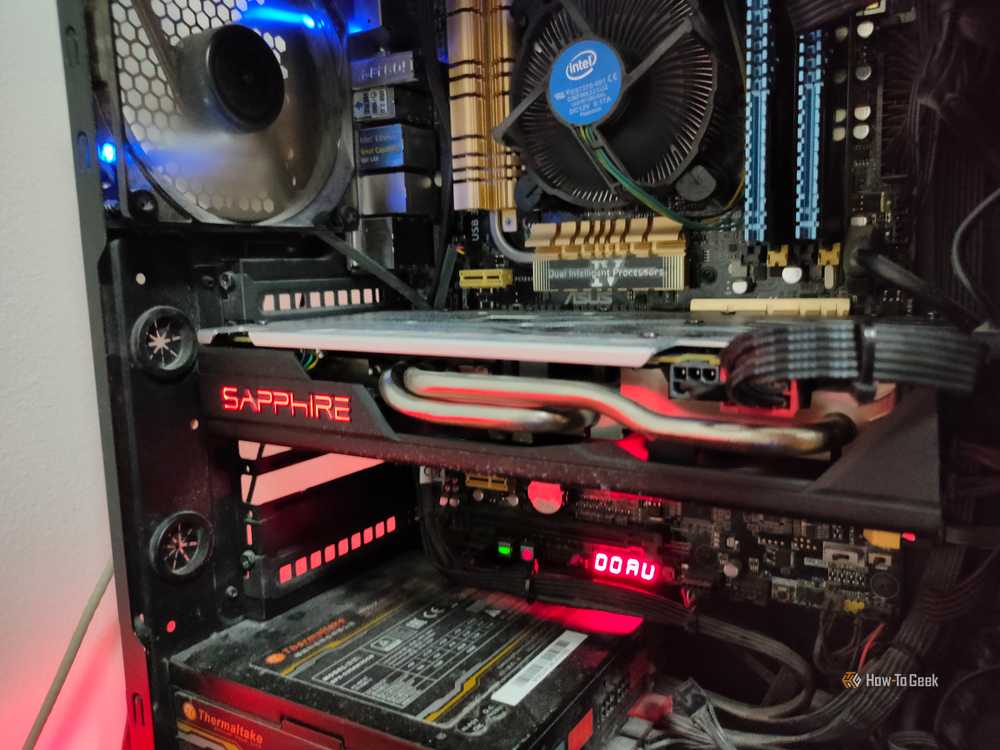
Those cards were no longer sold new for years, and they were significantly less powerful in 2023 compared to the RX 5000 and 6000 series in 2025. Plus, they also received a full year (or two) of support.
An early end-of-life like this has worrying implications not only for graphics cards but for the AM5 platform as well. Just a few weeks ago, I praised AMD for its excellent long-term platform support and for releasing new last-gen hardware for budget-minded consumers.
I firmly believe that hardware should receive the best software support possible until it’s truly obsolete. Fingers crossed that AMD learned its lesson and that other companies are taking notes.